DUE TO SPAM, SIGN-UP IS DISABLED. Goto Selfserve wiki signup and request an account.
...
- https://wiki.108.redhat.com/wiki/index.php/AMQP:Transaction_SIG_dtx_XML

- http://cwiki.apache.org/confluence/download/attachments/55787/dtx-classes-specification-document-v1.2.pdf
- http://cwiki.apache.org/confluence/download/attachments/55787/dtx-classes-presentation-v0.10-PMC-03142007.pdf
The Qpid Implementation in Java
As shown on the following class diagram, there are two protocol specific dtx classes, that is to say DtxDemarcation and DtxCoordination that are highlighted in yellow.
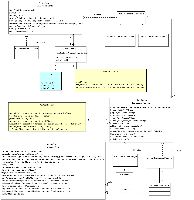
DtxDemarcation
DtxDemarcation interacts with the corresponding AMQChannel. The operation select creates the corresponding TransactionalContext (a channel has by default a non-transactional context). The operations start and end associate and disassociate a provided xid with the current TransactionalContext that percolates the call to the TransactionManager (operations begin and end respectively). Note that the operation end is responsible for acknowledging the messages against the context i.e. those messages are seen as being consumed under the currently associated xid.
DtxCoordination
DtxCoordination directly interacts with the TransactionManager. Note that it is a requirement that the operation end is called on all involved channels (i.e. all the acknowledged messages have been specifically consumed under the provided xid).
TransactionalContext
There are three flavours of TransactionalContext: the non transactional one, the local and distributed ones. The distributed and local contexts are very similar and both extend the abstract context. Note that the distributed context does not implement commit and rollback as this is DtxCoordination that is responsible for deciding of a transaction outcome.
TransactionManager and MessageStore
Transaction manager and message store are linked as the message store may need to add transaction records to the transaction identified by a given xid. Moreover, the transaction manager may need to use the transactional facilities of the underlying store. This is the case of the JDBCStore and JDBCTransactionManager. The JDBCTransactionManager uses the transaction facilities of the JDBCStore for performing ACID operations during prepare and commit.
...