DUE TO SPAM, SIGN-UP IS DISABLED. Goto Selfserve wiki signup and request an account.
...
Kafka clients already provide rebalance-related callbacks, but relying on client-side behavior is operationally is operationally fragile. In practice, callback availability and behavior depend on SDK adoption and upgrade cycles, which are difficult to control sometimes. Even when teams implemented the callback with log only. users may reduce or disable the logs by mistake or some other reasons. This creates a common failure mode: when incidents occur, critical rebalance evidence is missing at the client side, making diagnosis slow and uncertain so that we have to query the log in kafka broker side.
However, today server-side observability side observability is limited: coordinator logs can indicate rebalance activity, but logs alone are not a reliable integration surface for automated handling, and existing existing metrics do not carry the not carry the most actionable identifier (consume group id). As a result, operators can observe aggregate rebalance trends, but cannot lightweightly attach custom processing to specific groups without log parsing or invasive client changes.
This KIP proposes a lightweight broker-side rebalance callback capability to expose key rebalance context (including consume group id) on Kafka broker.
In short, the goal is to provide provide a stable, centrally controlled extension controlled extension point for observability observability and operational automation, without forcing client SDK client SDK upgrades and without introducing without introducing high-cardinality metric cardinality metric tags.
With the interface. New usage can be exposed . For example: AI trouble shooting for consume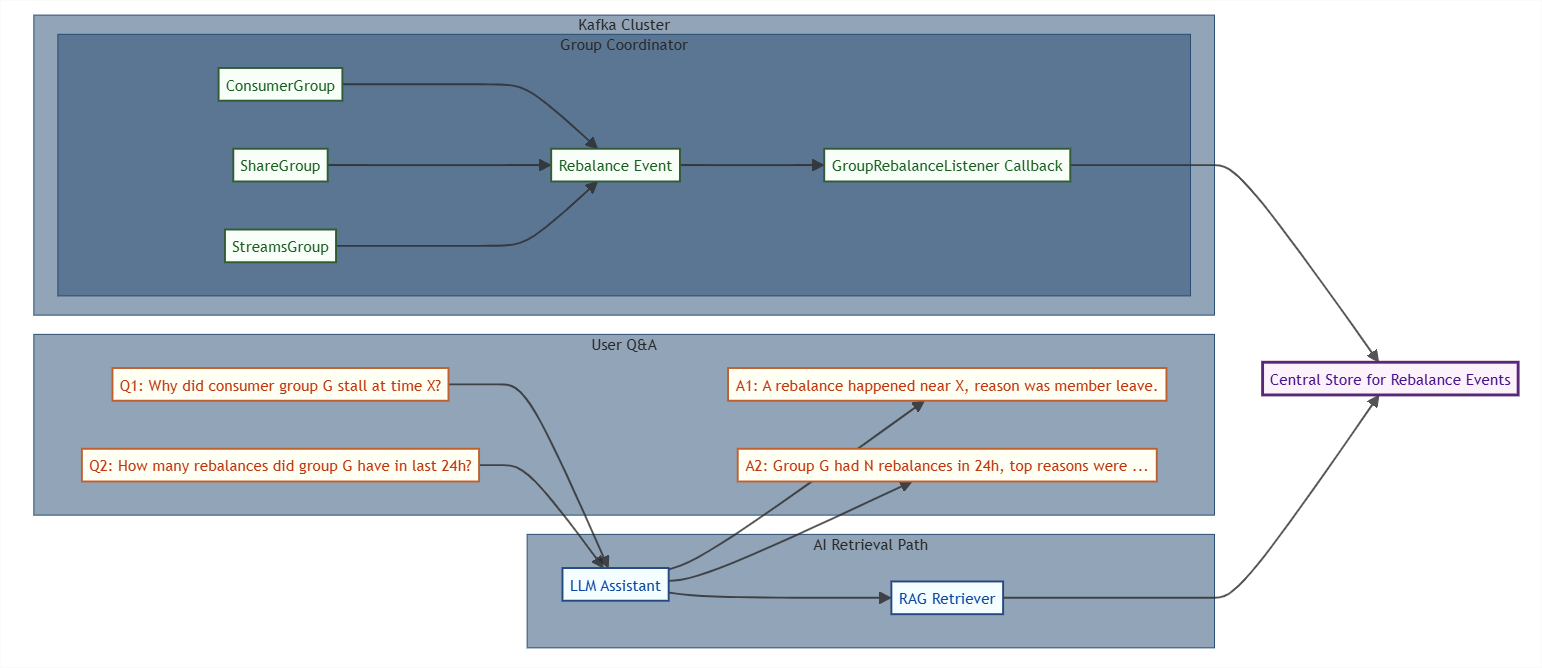
...
Enhancing existing coordinator metrics is not sufficient for this use case because the key troubleshooting dimension is group.id, while server metrics are intentionally aggregate. If we add group.id as a metric label/tag, it introduces high-cardinality time series (potentially thousands of groups), which increases memory and storage cost on both broker and monitoring systems memory cost on broker and can degrade observability kafka performance.