DUE TO SPAM, SIGN-UP IS DISABLED. Goto Selfserve wiki signup and request an account.
Status
| Page properties | ||||||||||||||||||||||||
|---|---|---|---|---|---|---|---|---|---|---|---|---|---|---|---|---|---|---|---|---|---|---|---|---|
|
Short summary
Allow Triggerers to yield and have the scheduler/process handle multiple events in a single trigger run, enabling true streaming-style workflows for async operators (e.g., HttpOperator/MSGraphAsyncOperator). This reduces repeated context switching and "ping-pong" between scheduler → worker → triggerer, enabling efficient in-trigger pagination and lazy task expansion.
Motivation (why)
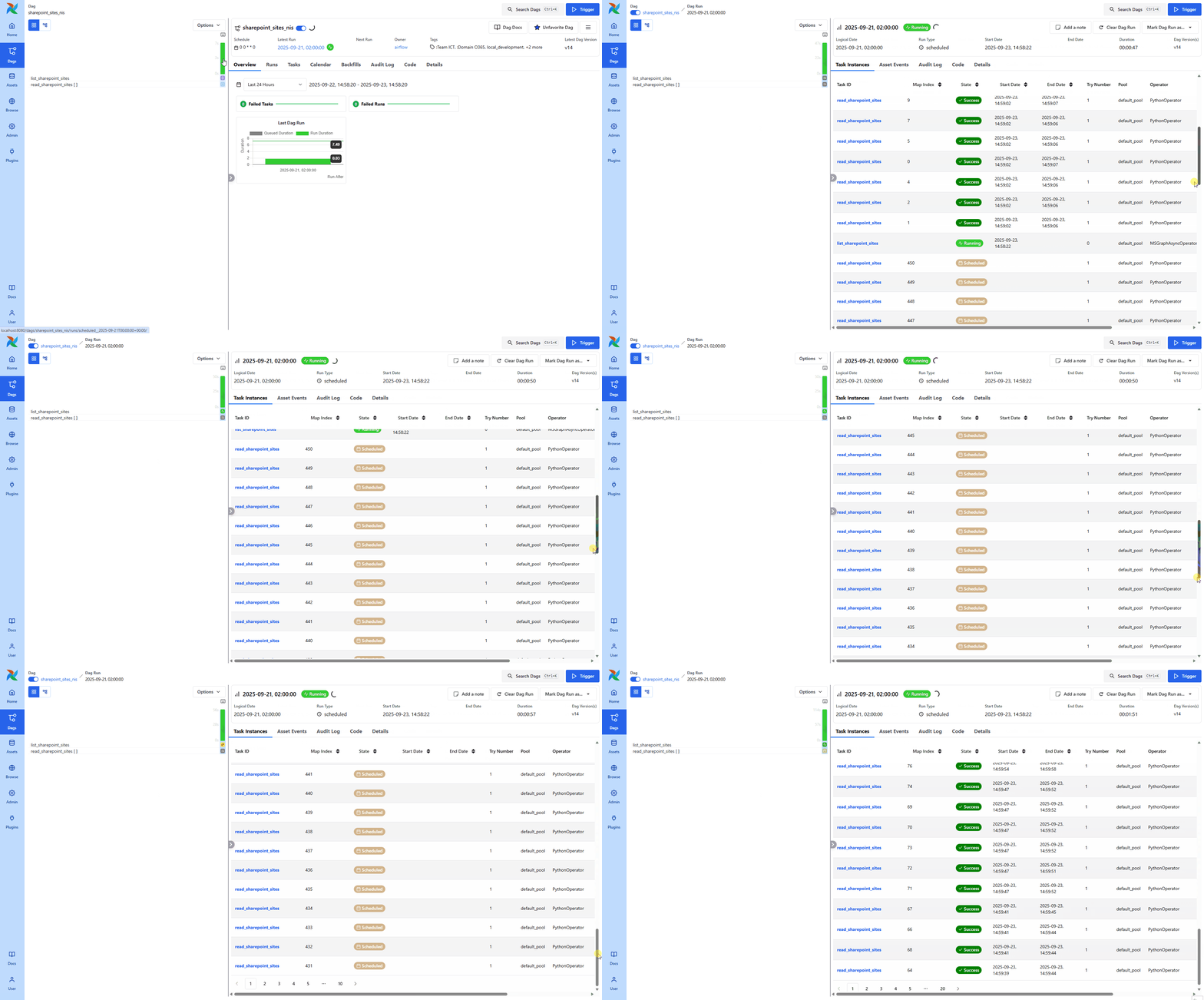
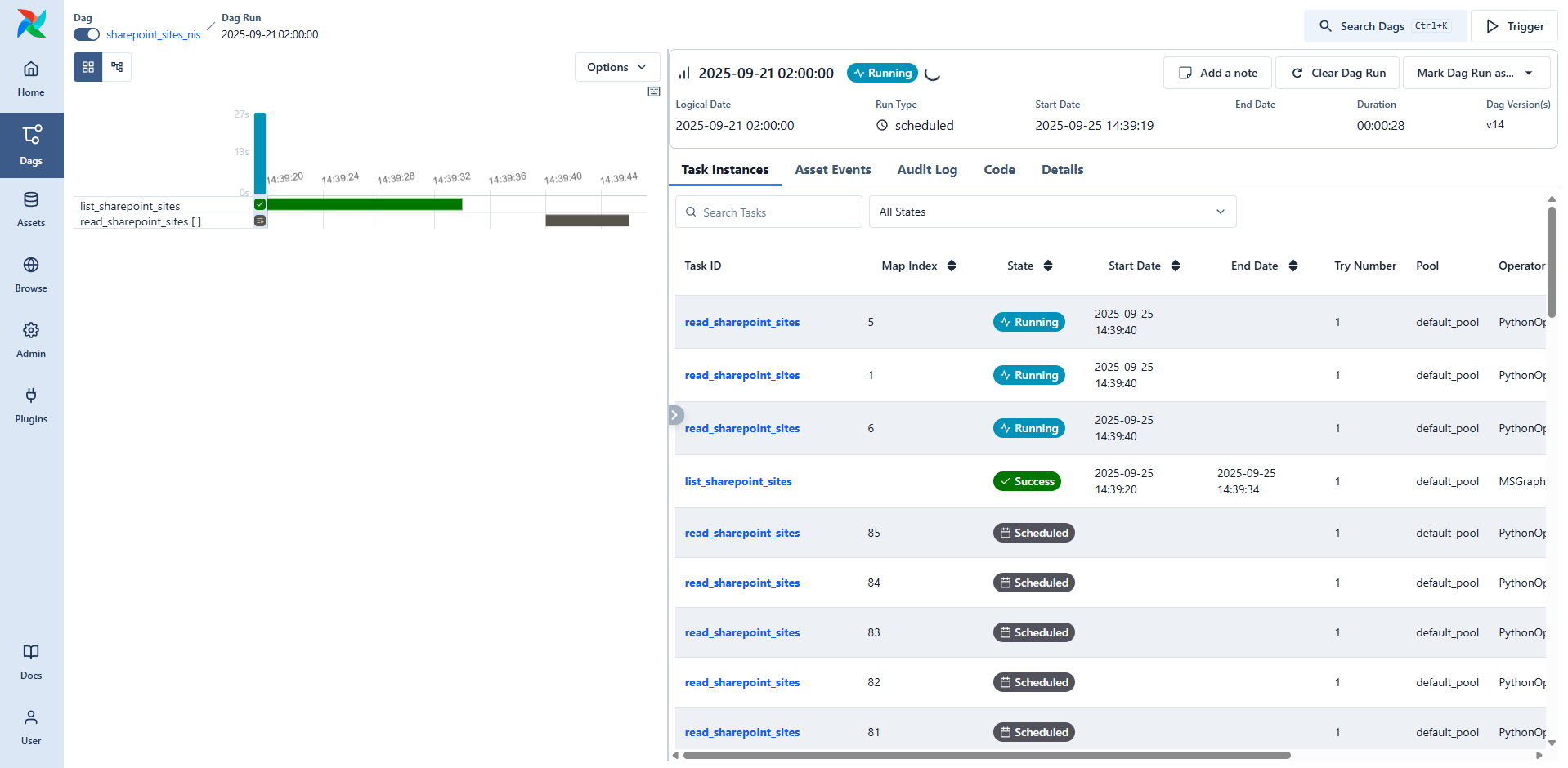
Many async operators implement pagination by deferring to triggers and then reentering the operator repeatedly. Even with
start_from_trigger, the current system processes only the first TriggerEvent yielded; additional pages require repeated defer/resume cycles.Repeated context switches create scheduler/worker/triggerer overhead and slow throughput for high-volume paginated APIs.
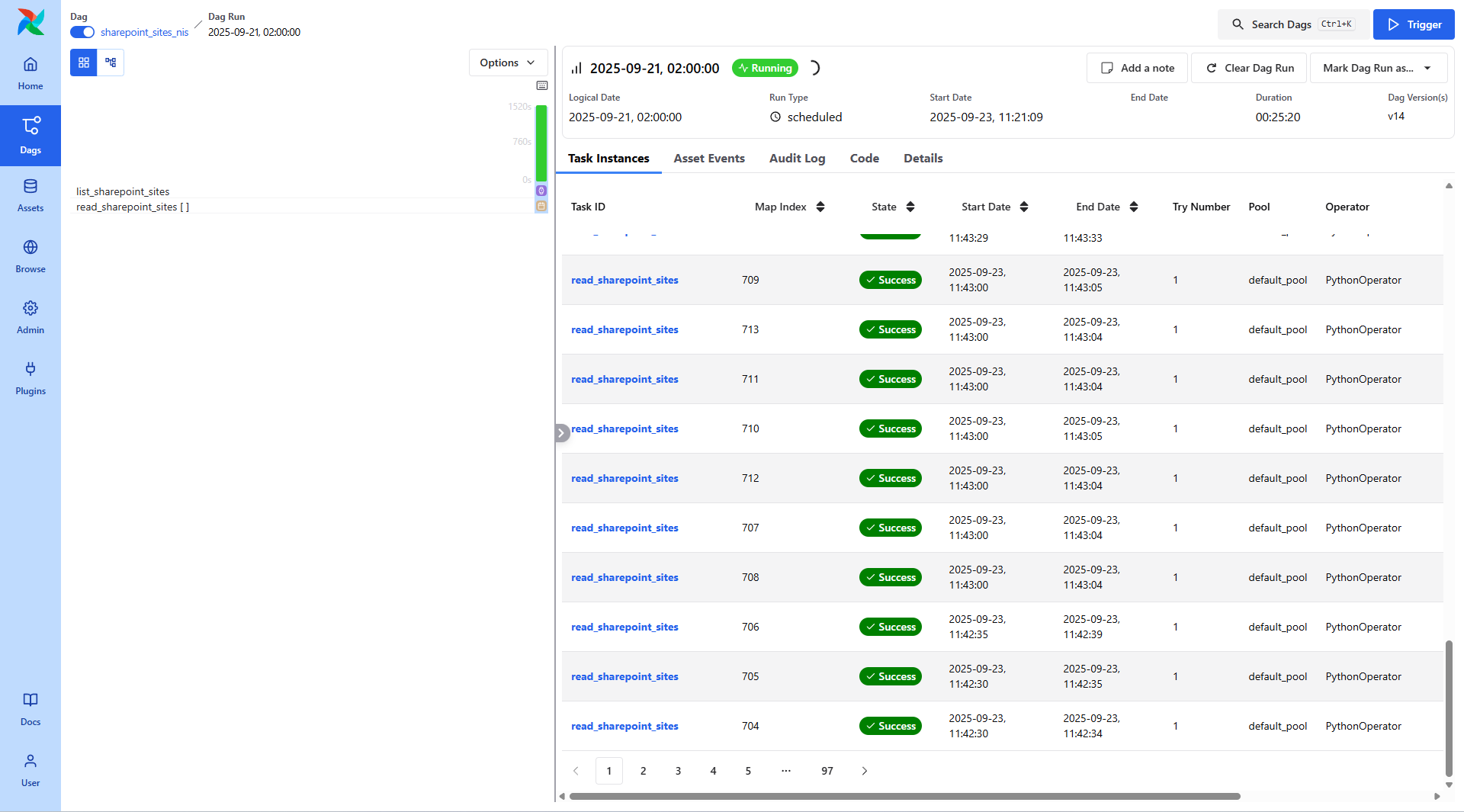
A streaming-capable triggerer can yield many events in one run; letting Airflow process those events (without full defer/resume for each page) produces substantial performance gains and allows lazy expansion of downstream tasks as pages arrive.
Goals
Allow triggers to yield many events during a single run and have those events processed incrementally by the operator runtime/scheduler without repeated operator deferral cycles.
Allow operators that know how to consume events to expand mapped tasks or XCom-driven iterables lazily as events arrive.
Preserve serializability guarantees (no unserializable callables in trigger args).
Be backward-compatible: existing triggers/operators continue to work.
Non-goals
Making arbitrary XComs iterable across the cluster. (That requires additional XCom semantics; out of scope.)
Allowing triggers to carry non-serializable callables/closures. Triggers must remain serializable.
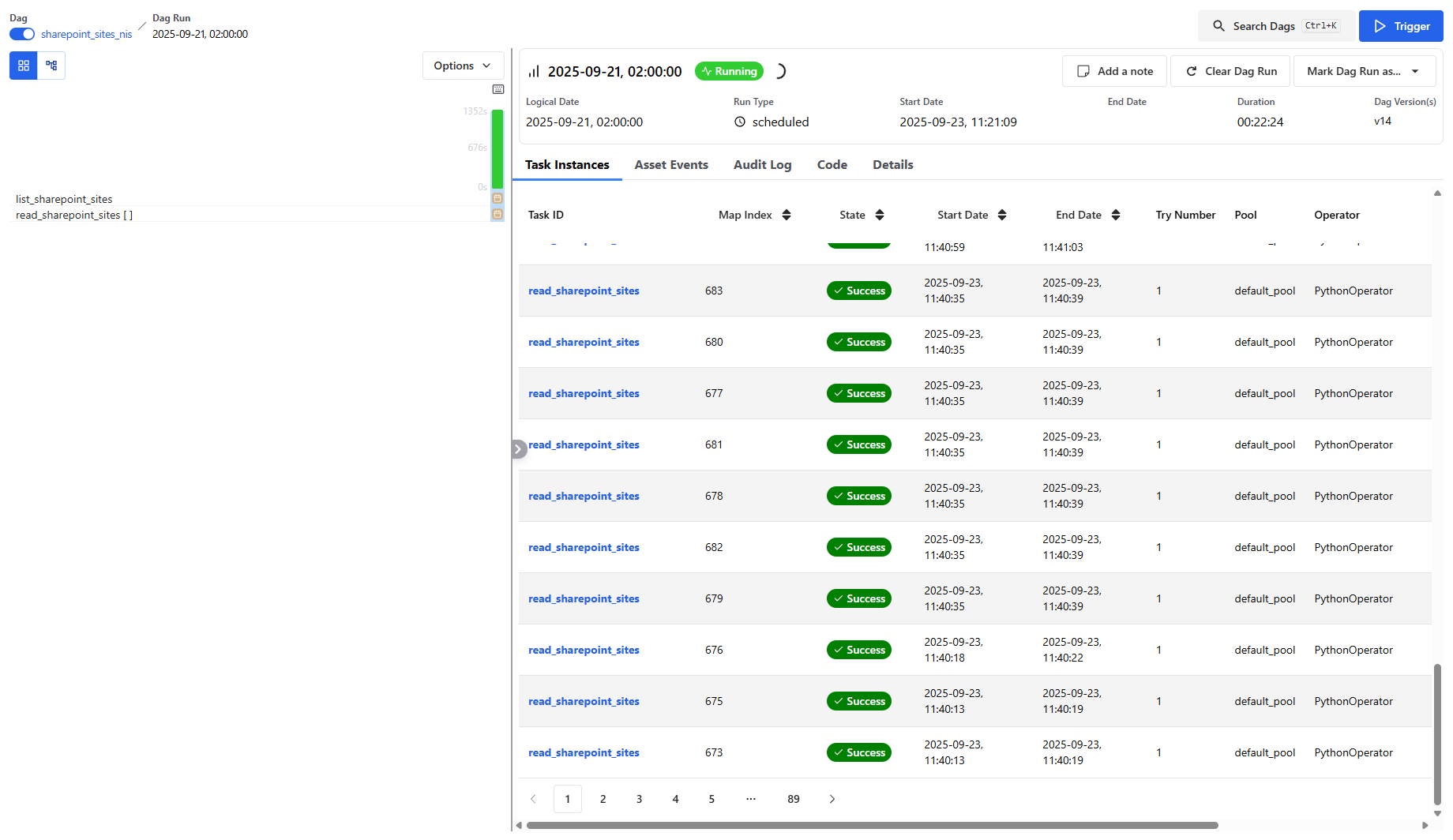
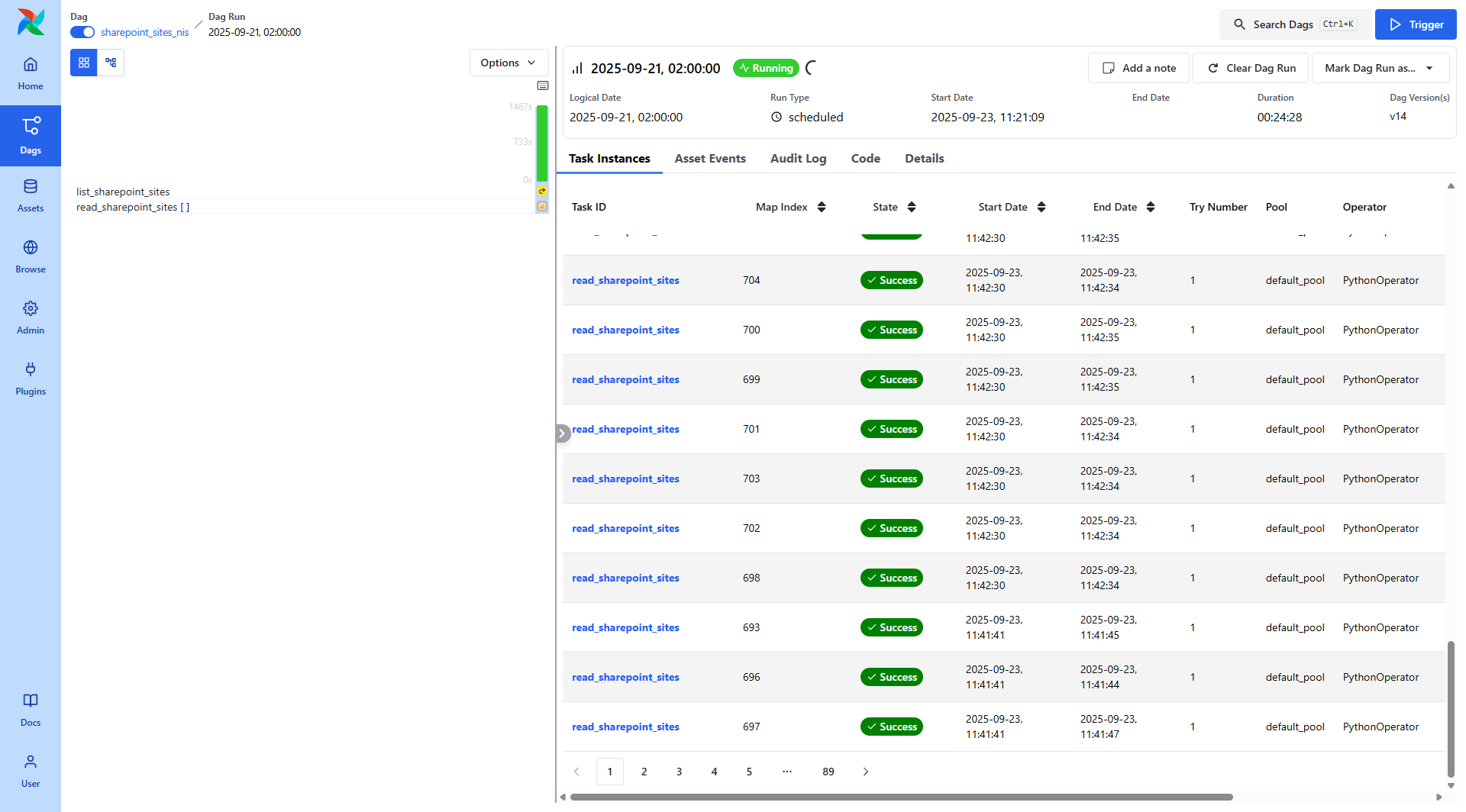
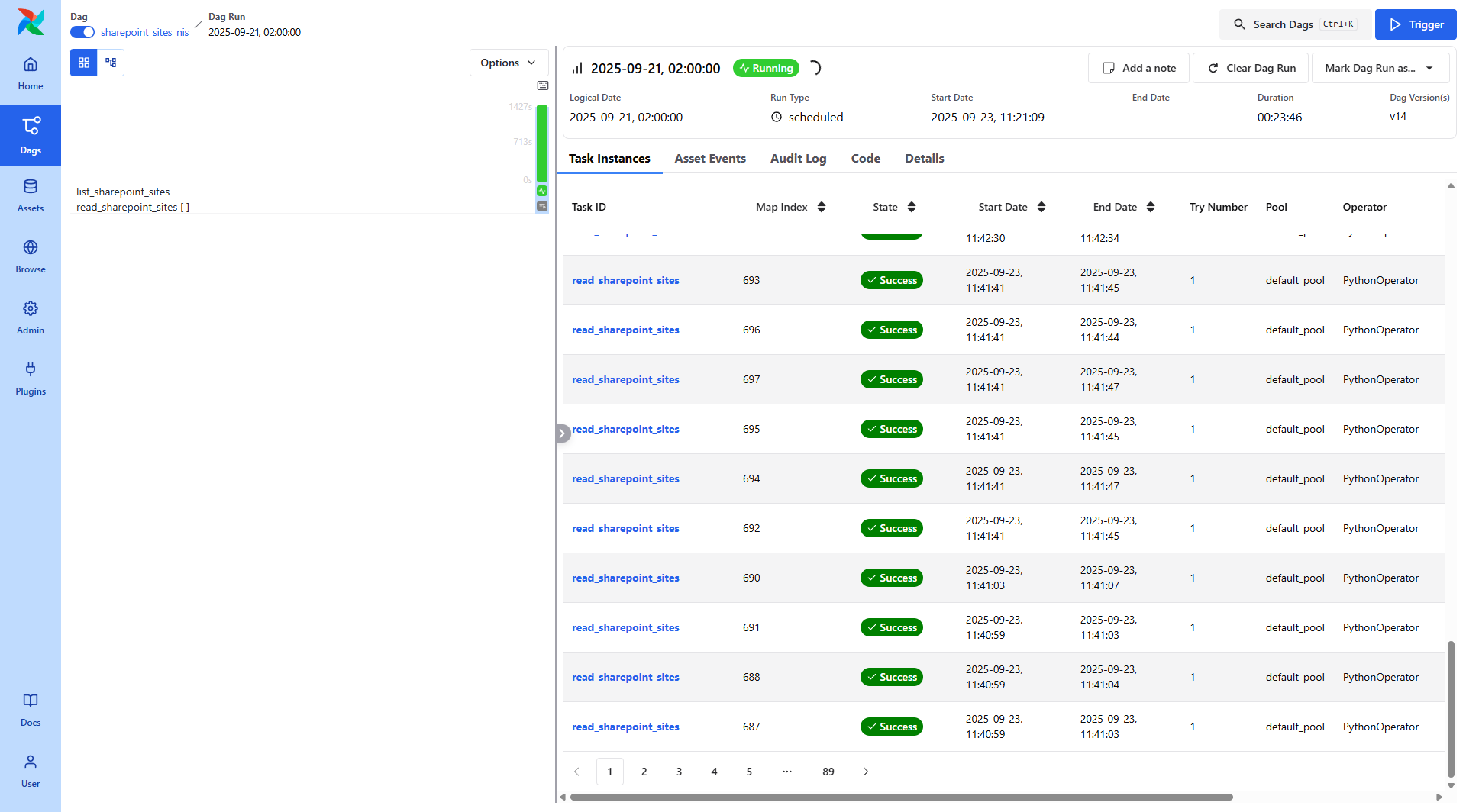
Demo
| Widget Connector | ||
|---|---|---|
|
High-level design
Key idea
Extend the triggerer-to-scheduler event path so that a single trigger run may produce a stream of events which the scheduler can incrementally deliver to the operator context (worker/scheduler) and allow the operator to handle each event without a full defer/resume roundtrip per page.
Components & responsibilities
Triggerer: can yield multiple
TriggerEvents duringrun(). It still must be serializable. If the trigger performs pagination, it should do that inside itsrun()loop andyieldeach page as an event.Scheduler: must accept and process multiple events from the same trigger-run. Instead of ignoring all but the first yielded event, scheduler accepts the events and binds them to the operator’s
next_methodhandler incrementally.Operator / Worker:
Operators supporting streaming implement a
handle_trigger_events(events: Sequence[TriggerEvent], context)callback (or extendnext_methodto accept a batch/stream), which may:process events and optionally expand mapped tasks or create XComs,
decide whether trigger should continue producing (e.g., requests more pages) — but triggers are the ones that control pagination inside
run().
Operators still raise
TaskDeferredto start the trigger if they cannot proceed synchronously.
Start-from-trigger: still used — when present we skip the initial worker-run step. The AIP assumes
start_from_triggerexists and is used (Airflow 3.0+).
API changes / additions
Triggerer run behavior: no signature change, but scheduler processing semantics change: treat
yieldas a stream of events, not just the first.Scheduler/Triggerer protocol:
Add an event envelope with fields
{trigger_run_id, sequence_index, payload, is_last}for each yielded event. This helps ordering and safe incremental processing.
Operator callback:
Add
next_method(self, event: TriggerEvent | List[TriggerEvent], context)accept either single or batched events, or an optionalhandle_trigger_events(self, events, context)method.For backward compatibility, if operator implements the old
next_method(event, context), the scheduler will call it for each event individually.
DAG parsing checks: if
start_from_triggeris enabled andstart_trigger_argscontains a non-serializable callable, raise at parse time (existing check you already mentioned).
Ordering & consistency concerns
Use
sequence_indexto process events in order from the same trigger run.If operator processing of an event fails, the scheduler should:
surface the failure (normal task retry semantics) and
stop accepting further events for that run until retry/resume behavior is resolved.
If the trigger signals
is_last, scheduler can mark the trigger-run completed.
Security / serializability
Triggers and all trigger args must remain serializable (no lambdas/closures).
DAG parsing validates
start_trigger_argstypes and raises early if a non-serializable callable is present (your existing behavior).
Backward compatibility / migration
Existing triggers/operators continue to work: scheduler defaults to single-event processing if operator doesn’t opt-in.
Operators that want streaming implement the new batched
handle_trigger_eventsor accept repeatednext_methodcalls. Provide an adapter shim that calls an operator’s single-eventnext_methodrepeatedly if the operator hasn’t implemented streaming (so no breakage).Update common async operators (MSGraphAsyncOperator, HttpAsyncOperator) to implement in-trigger pagination and yield many
TriggerEvents.
Tests & acceptance criteria
Unit tests for:
multiple-event processing ordering,
failure during mid-stream event handling,
serializability check during DAG parse.
Integration tests:
MSGraphAsyncOperator with 10+ pages yields vs old approach measured in scheduler/worker/triggerer traces (assert fewer context-switch cycles).
Performance benchmarks demonstrating reduced scheduler <-> worker <-> triggerer hops.
Example operator migration notes
Refactor operator to:
Move pagination into the trigger
run()loop,Yield each page as a
TriggerEventenvelope,Ensure
start_trigger_argsare serializable,Implement
handle_trigger_eventsto consume events, create XComs, and expand tasks lazily.
Open questions / future work
Native iterable XComs (separate AIP).
Fine-grained backpressure between triggerer and scheduler (if extremely high event rates).
Event batching strategies (time / size) to trade off latency vs. scheduler invocation overhead.
Sequence diagrams
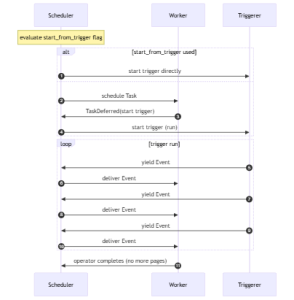
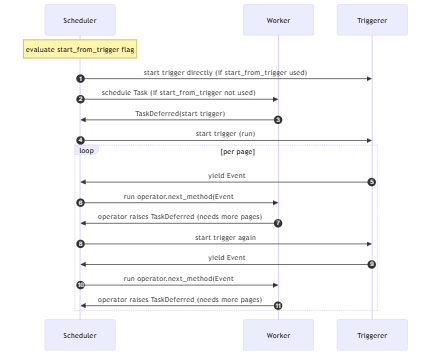
Below are two diagrams:
- Current/present behavior (with
start_from_triggerbut only first yielded event processed leading to repeated defer/resume cycles). - Proposed behavior (trigger yields many events in one run; scheduler forwards them incrementally to the operator; fewer context switches).
 vs
vs