| ID | IEP-33 |
| Author | |
| Sponsor | |
| Created | 13 Mar 2018 |
| Status |
Current SQL engine has a number of critical limitations:
This document is concerned only with engine's infrastructure. Query planning and statistics are non goals.
What to take in count:
"Source" - fundamental concept. Types:
class QueryRequest  {
    QueryId queryId;                          // Global query ID
	Collection<UUID> cacheDescriptorIds;      // IDs of the caches being queried
	Collection<UUID> nodeIds;                 // IDs of all nodes participating in the query
	AffinityTopologyVersion topVer;           // Topology version
	SqlSchemaVersion schemaVer;               // Expected schema version
	MvccSnapshot mvccSnapshot;                // MVCC snapshot
}

class QueryFragment {
    QueryId queryId;                          // Global query ID
    FragmentId fragmentId;                    // Unique fragment ID within a query
	FragmentId sinkId;                        // Who will consume results of this fragment
	String sql;                               // SQL to be executed
	Map<UUID, QueryFragmentPartitions> part;  // Involved partitions for every real cache participating in query
}

class QueryFragmentPartitions {
    Map<UUID, Integer> partCnts;              // Number of expected partitions to be reserved on nodes
	Map<UUID, Collection<Integer>> parts;     // Explicit partitions
}

class QueryBatch {
    QueryId queryId;                          // Global query ID
	FragmentId sourceId;                      // Source ID (producer)
	FragmentId sinkId;                        // Sink ID (consumer)
	UUID sourceNodeId;                        // Source node ID
    int sourceParallelism;                    // Parallelism of a fragment on a given node
	long batchId;                             // ID of the batch for the given source/sink pair (used for congestion control)
	List<Row> rows;                           // Data rows
	boolean last;                             // Whether this is the last batch
}

class QueryBatchAck {
    QueryId queryId;                          // Global query ID
    FragmentId sourceId                       // Source ID
	int lastBatchId;                          // ID of the last acked batch
} |
// TODO: Describe project risks, such as API or binary compatibility issues, major protocol changes, etc.
// TODO: Links to discussions on the devlist, if applicable.
// TODO: Links to various reference documents, if applicable.
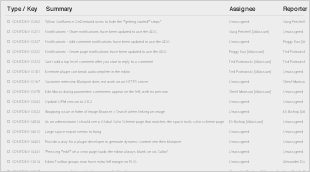
Tickets caused by H2 limitations: