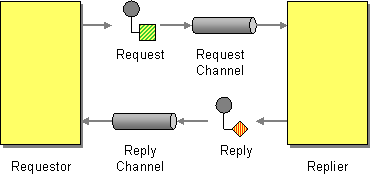
Camel supports the Request Reply from the EIP patterns by supporting the Exchange Pattern on a Message which can be set to InOut to indicate a request/reply. Camel Components then implement this pattern using the underlying transport or protocols.
For example when using JMS with InOut the component will by default perform these actions
|
See the related Event Message message |
When consuming messages from JMS a Request-Reply is indicated by the presence of the JMSReplyTo header.
You can explicitly force an endpoint to be in Request Reply mode by setting the exchange pattern on the URI. e.g.
jms:MyQueue?exchangePattern=InOut |
You can specify the exchange pattern in DSL rule or Spring configuration.
{snippet:id=example|lang=java|url=camel/trunk/camel-core/src/test/java/org/apache/camel/processor/SetExchangePatternTest.java} |
{snippet:id=example|lang=xml|url=camel/trunk/components/camel-spring/src/test/resources/org/apache/camel/spring/processor/setExchangePattern.xml} |