Top-Level Goal
The top-level goal is a single API for managing cluster configuration.
The beneficiaries of this work are those who want to change the configuration of the cluster (create/destroy regions, indices or gateway receivers/senders etc), and have these changes replicated on all the applicable servers and persisted in the cluster configuration service. In addition to developers building Geode-based applications, the target user group includes developers working on different parts of the Geode code such as Spring Data for Apache, queries for Lucene index, or storage for the JDBC connector.
Problem Statement
In the current implementation:
- Most cluster configuration tasks are possible, but only by coordinating XML file-based configuration files, properties files, and gfsh commands.
- Many of the desired outcomes are achievable through multiple paths.
- Establishing a consistent configuration and persisting it across the cluster is difficult, sometimes impossible.
Product Goals
The developer should be able to:
Create regions/indices on the fly.
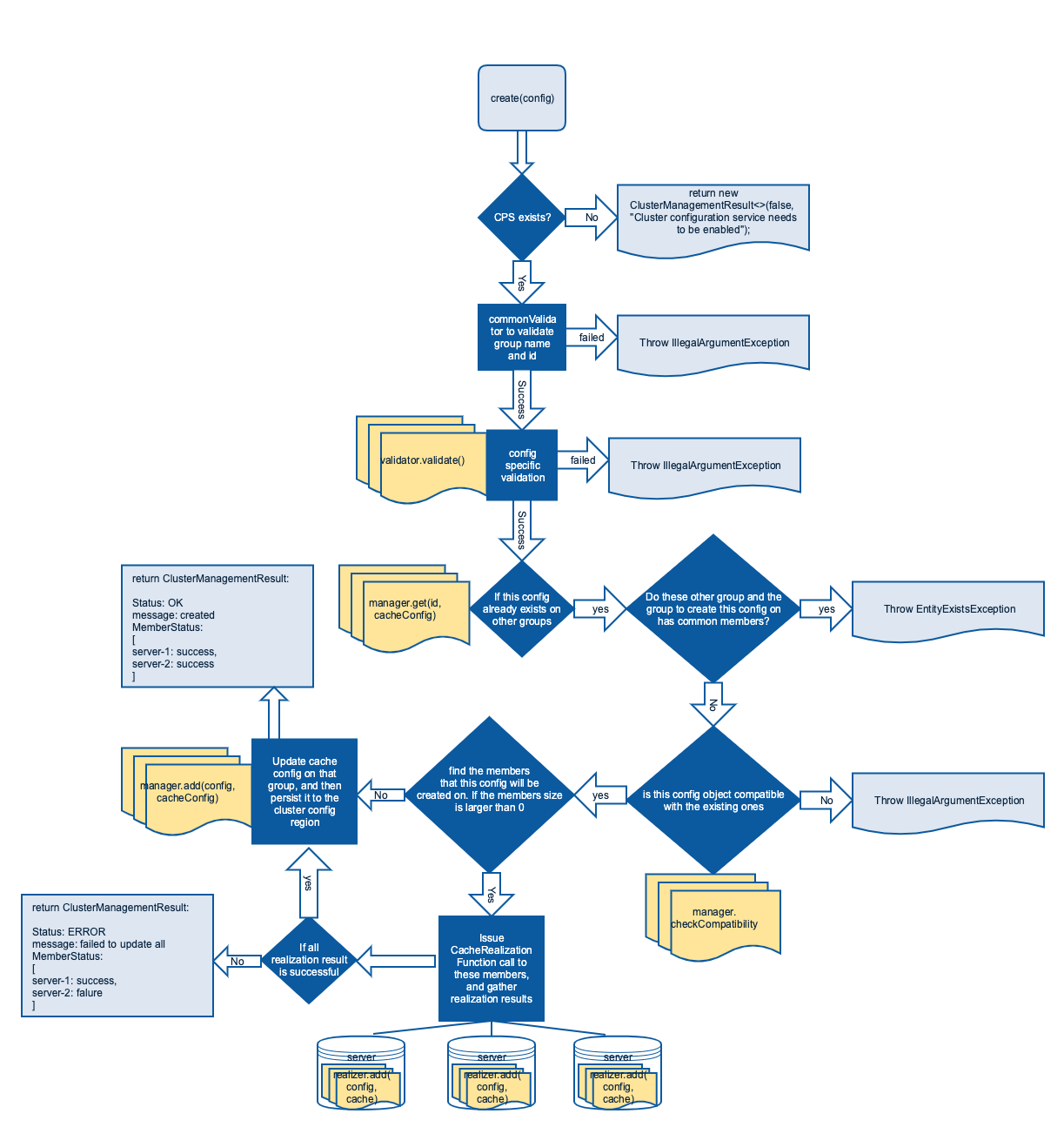
Persist the configuration and apply it to the cluster (when a new node joins, it has the config; when the server restarts, it has the config)
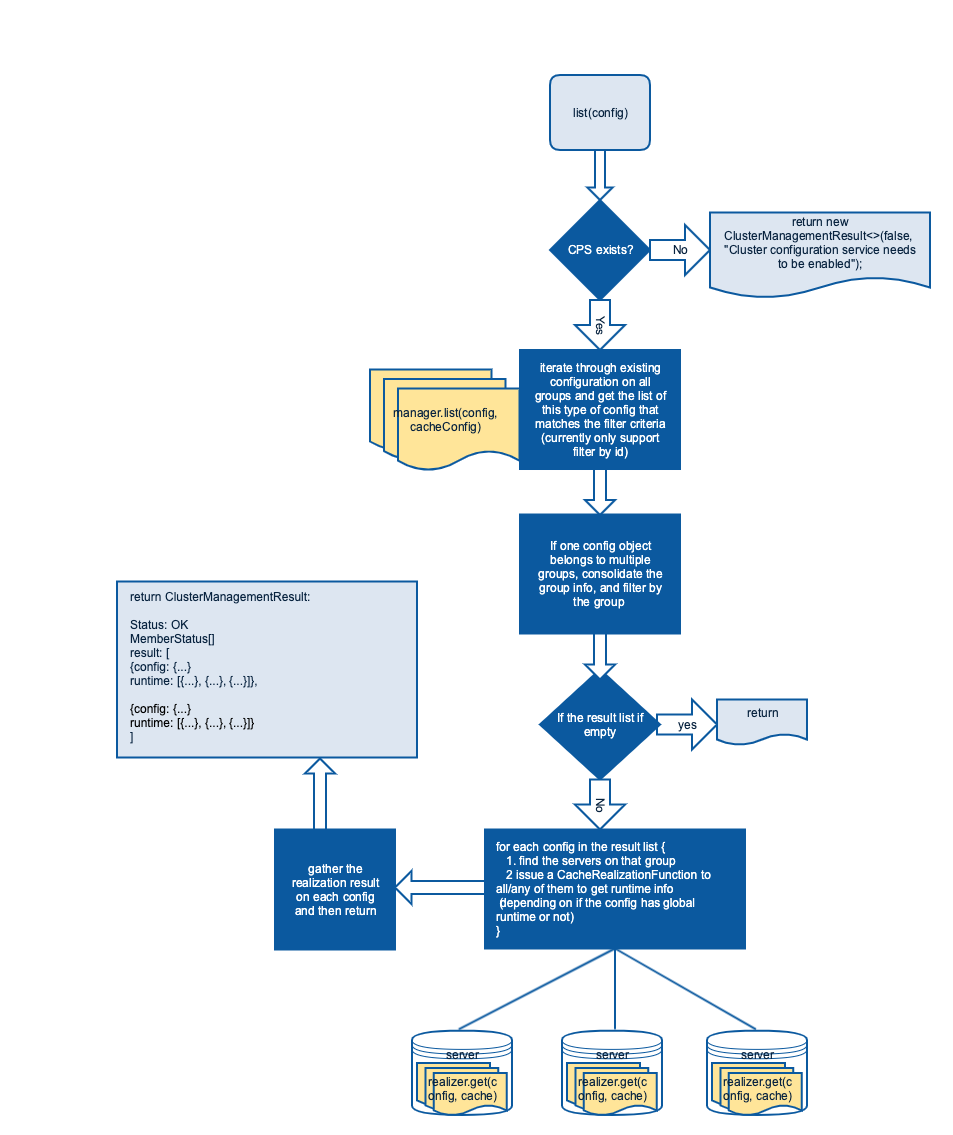
Obtain a consistent view of the current configuration
Apply the same change to the cluster in the same way
Be able to change the configuration in one place
Obtain this configuration without being on the cluster
Proposed Solution
The proposed solution includes:
- Address the multiple path issue by presenting a single public API for configuring the cluster, including such tasks as creating a region destroying an index, or update an async event queue.
- Provide a means to persist the change in the cluster configuration.
- Save a configuration to the Cluster Management Service without having to restart the servers
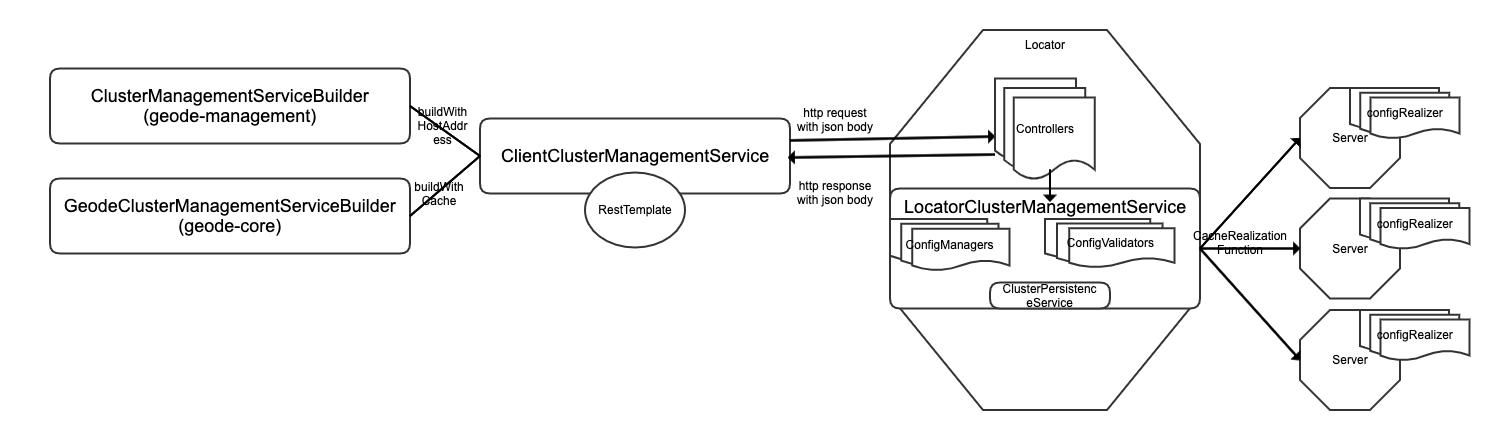
- Obtain the cluster management service from a cache when calling from a client or a server
- Pass a config object to the cluster management service
- Use CRUD operations to manage config objects
This solution should meet the following requirements:
The user needs to be authenticated and authorized for each API call based on the resource he/she is trying to access.
- Enable Security Manager with Finer Grained Security
User can call the API from either the client side or the server side.
The outcome (behavior) is the same on both client and server:
affects cluster wide
idempotent
What We Have Now
Our admin rest API "sort of" already serves this purpose, but it has these shortcomings:
- It's not a public API
- The API is restricted to the operations implemented as gfsh commands, as the argument to the API is a gfsh command string.
- Each command does similar things, yet commands may not be consistent with each other.
Below is a diagram of the current state of things:
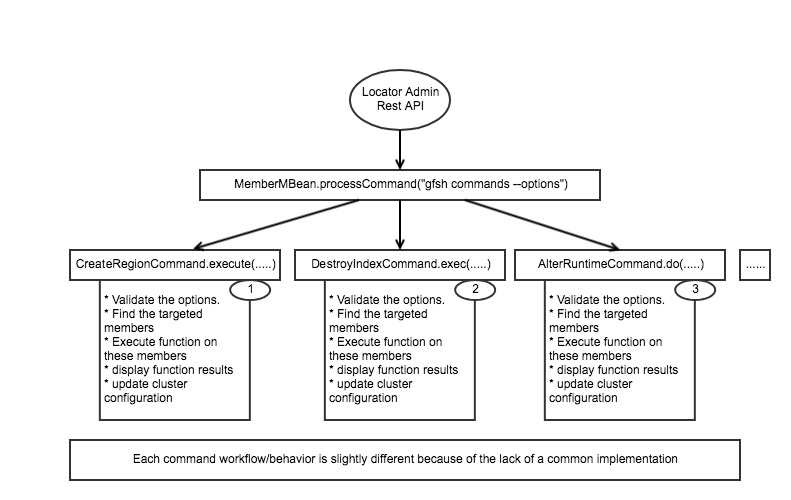
From the current state of commands, It's not easy to extract a common interface for all the commands. And developers do not want to use gfsh command strings as a "makeshift" API to call into the command. We are in need of a unified interface and a unified workflow for all the commands.
Proposal
We propose a new Cluster Management Service (CMS) which has two responsibilities:
- Update runtime configuration of servers (if any running)
- Persist configuration (has to be enabled to use CMS)
Note that in order to use this API, Cluster Configuration needs to be enabled.
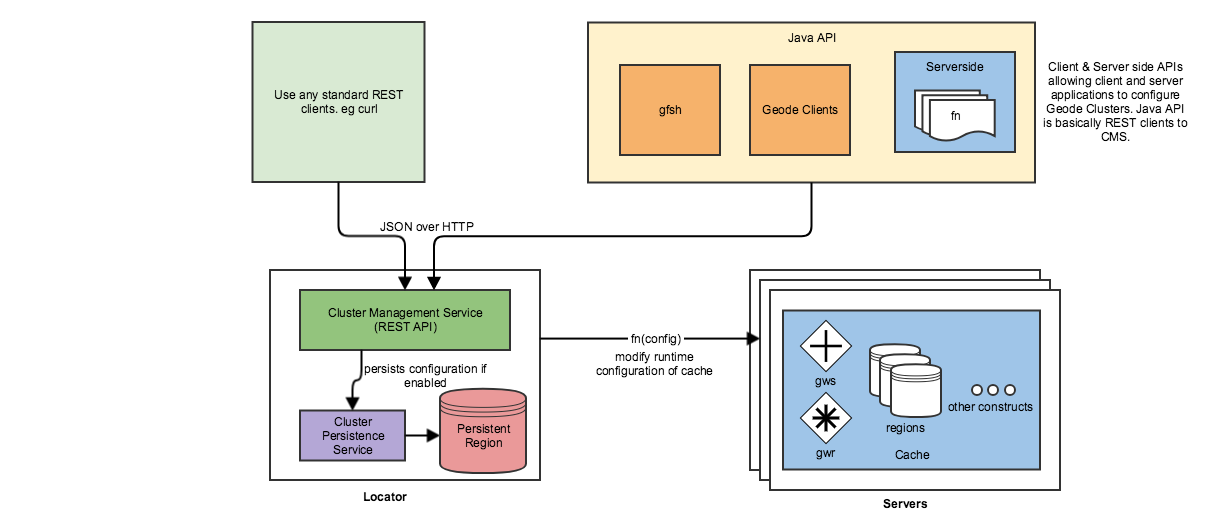
The CMS API is exposed as a new endpoint as part of "Admin REST APIs", accepting configuration objects (JSON) that need to be applied to the cluster. CMS adheres to the standard REST semantics, so users can use POST, PATCH, DELETE and GET to create, update, delete or read, respectively. The API returns a JSON body that contains a message describing the result along with standard HTTP status codes.