DUE TO SPAM, SIGN-UP IS DISABLED. Goto Selfserve wiki signup and request an account.
...
| HTML |
|---|
<div id="content" class="big-col"> |
Books on Tapestry
Tapestry 5: Die Entwicklung von Webanwendungen mit Leichtigkeit
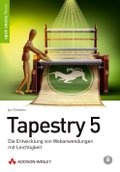
- Covers: Tapestry 5 (Version 5.1.0.5)
- Published: 2009
- Author: Igor Drobiazko
- Language: German
This book is the only one Tapestry 5 book written in German. It is a definitive introduction to Tapestry 5 written by Igor Drobiazko, a committer of Tapestry. The book covers:
- Getting Started with Tapestry 5
- Concepts of the framework
- Localization/internationalization
- Creating Forms
- Generation of user interfaces for JavaBeans
- Writing own components and mixins
- Ajax
- Writing tests for Tapestry applications
- Hibernate and Spring integration
- Dependency Injection and Tapestry IoC
- AOP and bytecode manipuation
Tapestry 5: Building Web Applications
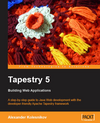
- Covers: Tapestry 5
- Published: 2008
- Author: Alexander Kolesnikov
- Language: English
Alexander follows up his long series of Tapestry 4 tutorials with the first book on Tapestry 5.
Tapestry Complete Reference
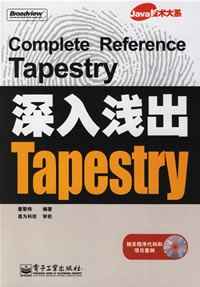
- Covers: Tapestry 4
- Published: 2007
- Author: A. Dong
- Language: Chinese
The first Chinese-language book to cover Tapestry (though Tapestry in Action has been translated). As a non-Chinese speaker, it's a bit hard to know what's between the covers, but looks like it gets into the nitty gritty of Tapestry, Spring and Hibernate.
Tapestry 101

- Covers: Tapestry 4 (Spring/Hibernate/Hivemind/Tacos(ajax)
- Publisher: SourceBeat
- Published: 2006
- Authors: Warner Onstine
Tapestry is an open-source web application framework written in Java. This framework is different from "standard" MVC frameworks (like Struts or WebWork) in that it is more of a component-oriented framework. A component-oriented framework (like JavaServer Faces) allows you to create re-usable components that you can then re-use on other projects with the ability to re-configure these components to suit a specific purpose.
Tapestry 101 will introduce readers to this framework that is growing in popularity more and more. The focus of this book is to guide you through designing and implementing your application and providing information that you can improve on it with your own custom components.
Howard Lewis Ship (creator of Tapestry) provides the Foreword to the book and adds:
"Tapestry 101's focus is about getting things done, from a user's perspective not a Tapestry developer's. It covers the issues you'll face building real applications."
Beginning POJOs: Lightweight Java Web Development Using Plain Old Java Objects in Spring, Hibernate, and Tapestry
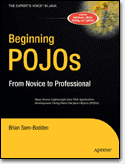
- Covers: Tapestry 4
- Publisher: Apress
- Published: 2006
- Authors: Brian Sam-Bodden
This book guides you through the construction of complex but lightweight enterprise Java-based web applications. Such applications are centered around several major open source lightweight frameworks, including Spring, Hibernate, Tapestry, and JBoss. The Tapestry chapter (ch.7, p.239-304) covers:
- Installation and Configuration
- Pages and Components
- Forms and Form Components
- Hivemind Services and Application State Objects
- Annotations
- Ajax-enabling applications with Tacos
Enjoying Web Development with Tapestry
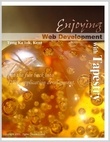
- Covers: Tapestry 4.1/4/3
- Publisher: Agile Skills
- Published: 2006
- Authors: Kent Tong
Enjoying Web Development with Tapestry by Kent Tong covers Tapestry 4.1 (with AJAX). Previous editions cover 4.0 and 3.0. Available in PDF and hard-copy formats.
- Getting Started with Tapestry
- Using Forms
- Validating Input
- Creating an e-Shop
- Creating Custom Components
- Supporting Other Languages
- Using the Table Component
- Handling File Downloads and Uploads
- Providing a Common Layout
- Using Javascript
- Building Interactive Forms with AJAX
- Test Driven Development with HtmlUnit
- Database and Concurrency Issues
- Using Hibernate
- Integrating with Struts
Tapestry Webanwendungen mit dem Apache Framework
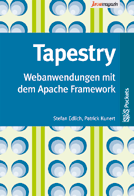
- Covers: Tapestry 3
- Publisher: S&S
- Published: 2004
- Authors: Stefan Edlich,Patrick Kunert
Tapestry Webanwendungen mit dem Apache Framework is a fast-paced guide to using Tapestry, focusing on combining Tapestry with other open-source frameworks, as well as developing Tapestry applications using Spindle. Covers:
- Web Frameworks, JavaServer Faces, .NET Web Forms und Tapestry
- Installation und Einbindung in Tomcat und JBoss
- Einstieg in Tapestry, HelloWorld
- Aufbau und Anwendung von Komponenten
- Formular-Validierung, JavaScript-Support, Internationalisierung
- Tapestry-Scope-Objekte (Visit, Global), Engines
- Inspector, Eclipse Plug-in Spindle
- Persistenz für Tapestry: JDO, Hibernate, Toplink und exotische Mapper
Tapestry in Action
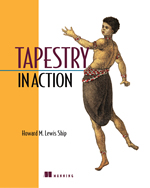
- Covers: Tapestry 3
- Publisher: Manning Publications
- Published: 2004
- Authors: Howard M. Lewis Ship
It is the definitive introduction to Tapestry written by Howard Lewis Ship, the creator of Tapestry. Tapestry In Action covers Tapestry 3.0, but is still broadly useful in the wake of the 4.0 release. It covers:
- Tapestry's Component Object Model
- How to write new components
- How to configure third party components
- Dynamic JavaScript integration
- Form validation
- Tapestry/JSP integration
- Localization/internationalization
- J2EE integration
Articles on Tapestry
If you are writing an article on Tapestry we suggest contacting the developers on the mailing list as we would be happy to provide feedback to help ensure accuracy in your article. Just ping us on the dev mailing list to get in touch.
...