DUE TO SPAM, SIGN-UP IS DISABLED. Goto Selfserve wiki signup and request an account.
Background
As of today, we deal with the following tpyes of releases:
- Airflow core
- Python Client (derived from core)
- Task SDK
- Providers
- Airflow CTL
- Helm Chart
Problem definition
As of Jan. 2026:
- The current division of GitHub Issues to categories:
- Overwhelms the average user due to many categories
Does not fully cover all existing release types
- Does not scale well to support additional release types from a UI/UX perspective
Release Type X [feature,bug] + Docs + Task & Meta + external links >= 25 categories
- Additionally, many issue types include unnecessary mandatory or extra fields, which:
Overwhelm users due to the number of required fields
Increase maintenance burden because of significant code duplication
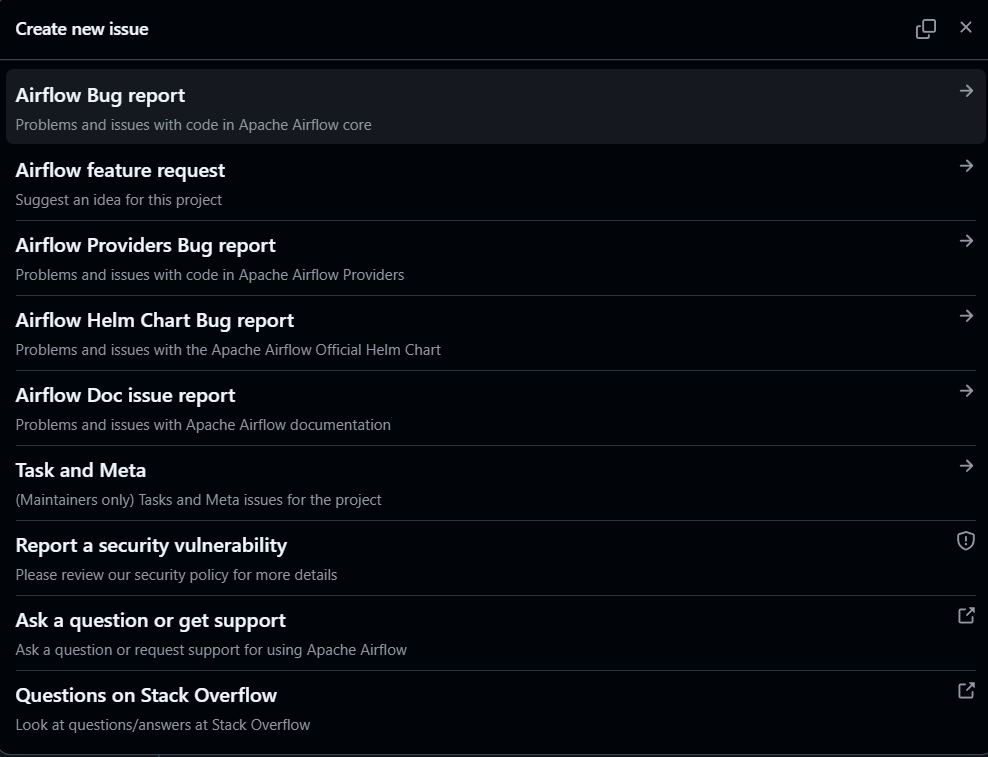
Figure 1 - Current "Create new issue" window
Proposal
WORK IN PROGRESS
This proposal suggests restructuring GitHub Issues, inc. both categories and fields, to improve UI/UX while accommodating current and future requirements.
To simplify issue reporting for end users, it is proposed to base the initial categorization solely on release type (with some unions where appropriate), following the scheme outlined below.
Since there is already automation in place that labels GitHub issues as bug or feature request, introducing a secondary manual categorization by bug/feature provides little to no additional value, given that final classification often changes during triage and reported bugs frequently reflect intended behavior or incomplete features.
Ultimately, the final classification should be determined by the triager, though user input may still be considered helpful where relevant.
Removal of unnecessray sections
"Docs" section
The “Docs” section should be considered for removal for the following reasons:
Documentation issues are generally the easiest to quickly resolve, especially with the assistance of LLMs.
With over 1.4K open issues, this section adds load for triagers and tends to mask more critical issues.
Docs issues could instead be reported under the regular issue types; making the reporting process slightly more demanding may encourage contributors to implement fixes themselves.
"Ask a question or get support" &"Questions on Stack Overflow" section
These sections should be considered for removal for UI/UX reasons:
Support and discussion channels are already discoverable from the main repository.
Platforms such as Stack Overflow are widely known and complemented by LLM-based assistance.
Including these options in the issue creation flow adds unnecessary complexity and increases cognitive load for users.
Suggested Issue Scheme
Airflow Core & Providers* (+ Task SDK & Python Client**)
Airflow version (required), choice between:
Latest stable (e.g., 3.1.6)
Main (development)
Other Airflow 3 version (with input field to specify which)
If “Other Airflow 3 version” is selected, which one? (optional)
Providers (optional), input for relevant provider(s) and their version(s)
How would you consider this issue? Choice between: N/A, Bug or Feature Request (or Docs?)
Current behavior (required)
Includes background details, reproduction steps, and logs for alleged bugsDesired behavior (required)
Includes usage examples for feature requestsDeployment (optional), choice between:
N/A (default)
Official Helm chart
Managed service (Astronomer, MWAA, GCC, ADF)
Local deployment (Breeze / Docker Compose)
Other
Deployment details (optional)
Checkboxes (both unchecked by default, as they are today):
Are you willing to submit a PR? (with the addition in parantheses "Contributing a fix, or helping find someone who will, is often the fastest way to resolve an issue")
Code of Conduct
* Current description should be shortened
** Omitted for brevity; the description should be added later
Airflow CTL (Buğra Öztürk )
- Airflow version (required), choice between:
- AirflowCTL Version
Latest stable (e.g., 3.1.6)
Main (development)
- Airflow CTL Command
- Keyring Backend/Version (To understand if the problem is on our end or a bug from the keyring backend)
- Auth Type
username:password- Token
Current behavior (required)
Desired behavior (required)
Checkboxes
Helm Chart (Unknown User (jedcunningham) ) - ?
Task and Meta (Maintainers only) - retain as is
Report a security vulnerability - retain as-is
Illustration of the suggested "Create new issue"
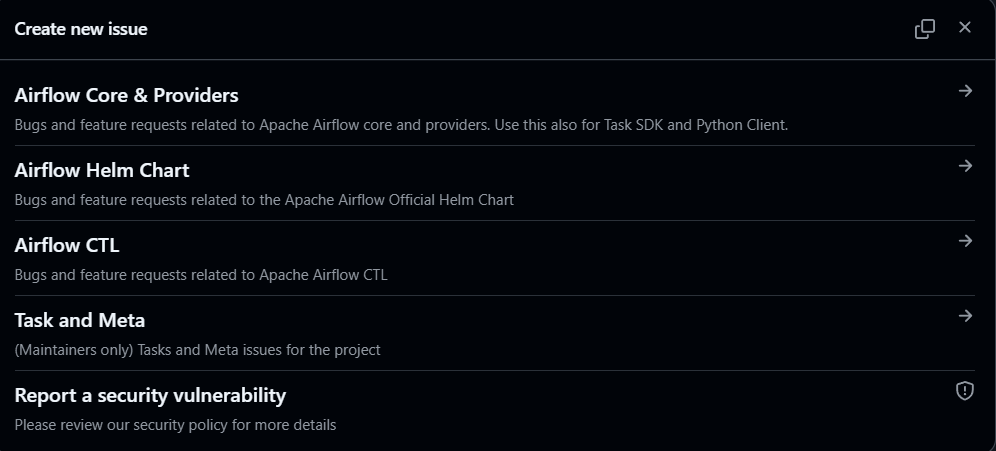
Figure 2 - Suggested "Create new issue" window
3 Comments
Buğra Öztürk
Feb 01, 2026Thanks for prepping Unknown User (shahar) ! After reading this document, I see we are missing
Airflow CTL Bug Reportat least in the current structure :)I like the idea. I am not sure if we really need to split the feature requests
I can suggest a Bug Report Template for CTL. CTL Bug Report Template Suggestion
Suggested template, would be great to hear more.
Latest stable (e.g., 3.1.6)
Main (development)
Other Airflow 3 version (with an input field to specify which)
Latest stable (e.g., 3.1.6)
Main (development)
username:passwordCurrent behavior (required)
Includes background details, reproduction steps, and logs for alleged bugs
Desired behavior (required)
Includes usage examples for feature requests
Checkboxes (both checked by default to encourage action from the reporter):
Are you willing to submit a PR?
Code of Conduct
Unknown User (shahar)
Feb 03, 2026Your suggestion for the AirflowCTL template looks great! I'll add it to the proposal
Not entirely sure what you meant by "splitting the feature request", as I suggested the opposite - the template for each release type will be unified for both feature requests and bugs, and only later we will later distinguish them - first by automation and finally by human triaging.
Buğra Öztürk
Feb 03, 2026I overlooked that part, sorry Shahar! I am all up for it :D